
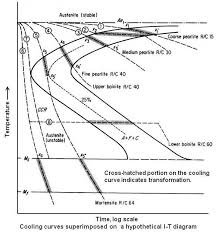
The cooling curve is an important concept in science that helps explain how the temperature of a substance changes as it cools over time. It is commonly studied in chemistry, physics, and materials science because it reveals valuable information about phase changes, energy transfer, and the physical properties of substances. A cooling curve is typically represented as a graph that shows the relationship between temperature and time while a substance is losing heat. As the temperature decreases, the substance may pass through different physical states such as gas, liquid, and solid. These transitions occur at specific temperatures and are represented on the graph as flat or horizontal sections where the temperature temporarily stops changing even though cooling continues. Understanding the cooling curve helps scientists analyze how materials behave under different conditions, identify melting and freezing points, and study the processes that occur during changes of state. The concept is widely used in laboratories, manufacturing processes, metallurgy, environmental science, and many other fields. By examining the cooling curve, researchers and students can observe how energy is released as heat leaves a substance and how molecular motion changes as the temperature drops. This makes the cooling curve a powerful tool for understanding the fundamental behavior of matter.
What Is a Cooling Curve
A cooling curve is a graphical representation that shows how the temperature of a substance decreases as it loses heat over time. On this graph, temperature is usually displayed on the vertical axis, while time is shown on the horizontal axis. When a hot substance begins to cool, its temperature gradually decreases until it reaches a point where a phase change occurs. During this phase change, the temperature temporarily remains constant even though heat continues to be released. This happens because the energy being removed is used to rearrange the structure of the molecules rather than lower the temperature. Once the phase change is complete, the temperature begins to decrease again until another phase change occurs or until the substance reaches the surrounding temperature. Cooling curves are particularly useful for identifying important temperatures such as the freezing point of a substance. By carefully observing the flat sections of the graph, scientists can determine the exact temperature at which a substance transitions from liquid to solid. This information is valuable for both scientific research and industrial applications.
The Science Behind Cooling Processes
The cooling process occurs because heat naturally flows from warmer objects to cooler surroundings. When a substance is heated, its molecules gain energy and move more rapidly. As the substance begins to cool, it loses energy to the surrounding environment. This loss of energy causes the molecules to move more slowly and come closer together. The rate at which a substance cools depends on several factors, including the temperature difference between the substance and its environment, the surface area of the substance, and the thermal properties of the material. Substances with higher thermal conductivity release heat more quickly than those with lower conductivity. Additionally, the environment in which cooling occurs can influence the process. For example, a hot liquid will cool faster in a cold environment than in a warm one. The cooling curve helps illustrate these energy changes and provides a visual representation of how temperature decreases over time.
Understanding Phase Changes on the Cooling Curve
One of the most interesting features of a cooling curve is the appearance of flat sections where the temperature remains constant. These flat sections represent phase changes, which occur when a substance transitions from one physical state to another. For example, when a liquid cools to its freezing point, it begins to transform into a solid. During this transformation, energy continues to leave the substance, but the temperature does not decrease until the phase change is complete. Instead, the energy released is used to rearrange the molecules into a more organized structure characteristic of a solid. This energy is known as latent heat. Latent heat plays an important role in phase transitions because it represents the energy required to change the arrangement of molecules without altering temperature. The presence of these flat sections on the cooling curve provides clear evidence of phase changes and allows scientists to determine important physical properties of substances.
Cooling Curve of Water as an Example
Water provides one of the most commonly studied examples of a cooling curve. When liquid water is heated and then allowed to cool, its temperature gradually decreases until it reaches its freezing point. At this temperature, the cooling curve displays a flat section because the water begins to freeze and form ice. During this stage, energy continues to be released as the liquid molecules arrange themselves into the structured crystal pattern of solid ice. However, the temperature remains constant until the entire sample has solidified. After the phase change is complete, the temperature of the solid ice begins to decrease further as it continues to lose heat. This simple example demonstrates how cooling curves can reveal important information about phase transitions and the physical properties of substances.
Importance of Cooling Curves in Chemistry
Cooling curves are extremely valuable in chemistry because they help scientists identify the physical characteristics of materials. By studying the shape of a cooling curve, researchers can determine the freezing point of a substance and analyze whether it is pure or mixed with other substances. Pure substances usually display very clear and consistent phase change temperatures on their cooling curves. In contrast, mixtures often show a gradual temperature change during freezing rather than a sharp, flat plateau. This difference allows chemists to evaluate the purity of substances and identify unknown materials. Cooling curves are also used in experiments to study crystallization processes and understand how different compounds behave during temperature changes.
Applications of Cooling Curves in Industry
Cooling curves are not only useful in laboratories but also play a significant role in industrial processes. In metallurgy, cooling curves are used to study how metals solidify after being melted. The way a metal cools can affect its internal structure and mechanical properties. By controlling the cooling process, manufacturers can produce materials with specific strength, hardness, and durability characteristics. Cooling curves are also important in the food industry, where temperature control is essential for preserving quality and safety. For example, freezing processes for foods rely on careful monitoring of temperature changes to ensure proper storage conditions. In the field of environmental science, cooling curves can help researchers study temperature variations in natural systems such as lakes and oceans.
Factors That Affect Cooling Curves
Several factors can influence the shape and behavior of a cooling curve. One important factor is the initial temperature of the substance. A substance that starts at a higher temperature will take longer to cool and may show a longer initial slope on the graph. The surrounding environment also plays a major role. If the environment is very cold, heat will be transferred away from the substance more quickly. Another factor is the physical properties of the substance itself, including its mass, density, and heat capacity. Substances with higher heat capacity require more energy to change temperature, which means they cool more slowly. The surface area of the substance also affects cooling rate. Larger surface areas allow more heat to escape, accelerating the cooling process. Understanding these factors helps scientists interpret cooling curves more accurately.
Cooling Curves in Materials Science
In materials science, cooling curves are used to analyze how different materials behave during solidification. This information is particularly important when developing new materials for engineering applications. The cooling rate can influence the size and arrangement of crystals that form as a material solidifies. Faster cooling rates often produce smaller crystals, while slower cooling allows larger crystals to develop. These structural differences can significantly affect the material’s properties. For example, metals with fine crystal structures are often stronger and more resistant to damage. By studying cooling curves, scientists can design materials with specific characteristics suited for different technological applications.
Conclusion
The cooling curve is a powerful scientific tool that provides valuable insights into how substances change temperature and state as they lose heat. By examining the relationship between temperature and time, scientists can identify important phase changes, determine physical properties, and understand how energy is transferred during cooling processes. Cooling curves are widely used in fields such as chemistry, physics, metallurgy, environmental science, and industrial manufacturing. They help researchers study the behavior of materials, analyze purity, and improve production techniques. Understanding cooling curves not only deepens our knowledge of basic scientific principles but also supports the development of technologies that rely on precise temperature control. As science and technology continue to advance, the cooling curve remains a fundamental concept that helps explain the behavior of matter in both natural and industrial environments.
FAQs
What is a cooling curve?
A cooling curve is a graph that shows how the temperature of a substance decreases over time as it loses heat.
Why are cooling curves important in science?
Cooling curves help scientists understand phase changes, identify freezing points, and analyze the physical properties of substances.
What causes flat sections on a cooling curve?
Flat sections occur during phase changes when energy is used to change the state of a substance rather than decrease its temperature.
How are cooling curves used in industry?
Industries use cooling curves to control processes such as metal solidification, food freezing, and material production.
What factors affect the shape of a cooling curve?
Factors include the initial temperature of the substance, environmental conditions, surface area, and the thermal properties of the material.